What the Coating Line Doesn’t Tell You. Read the article
What the Coating Line Doesn’t Tell You. Read the article
Inline monitoring for roll-to-roll and sheet-to-sheet lines. Catch drift while the roll is still running, not after the material is processed.
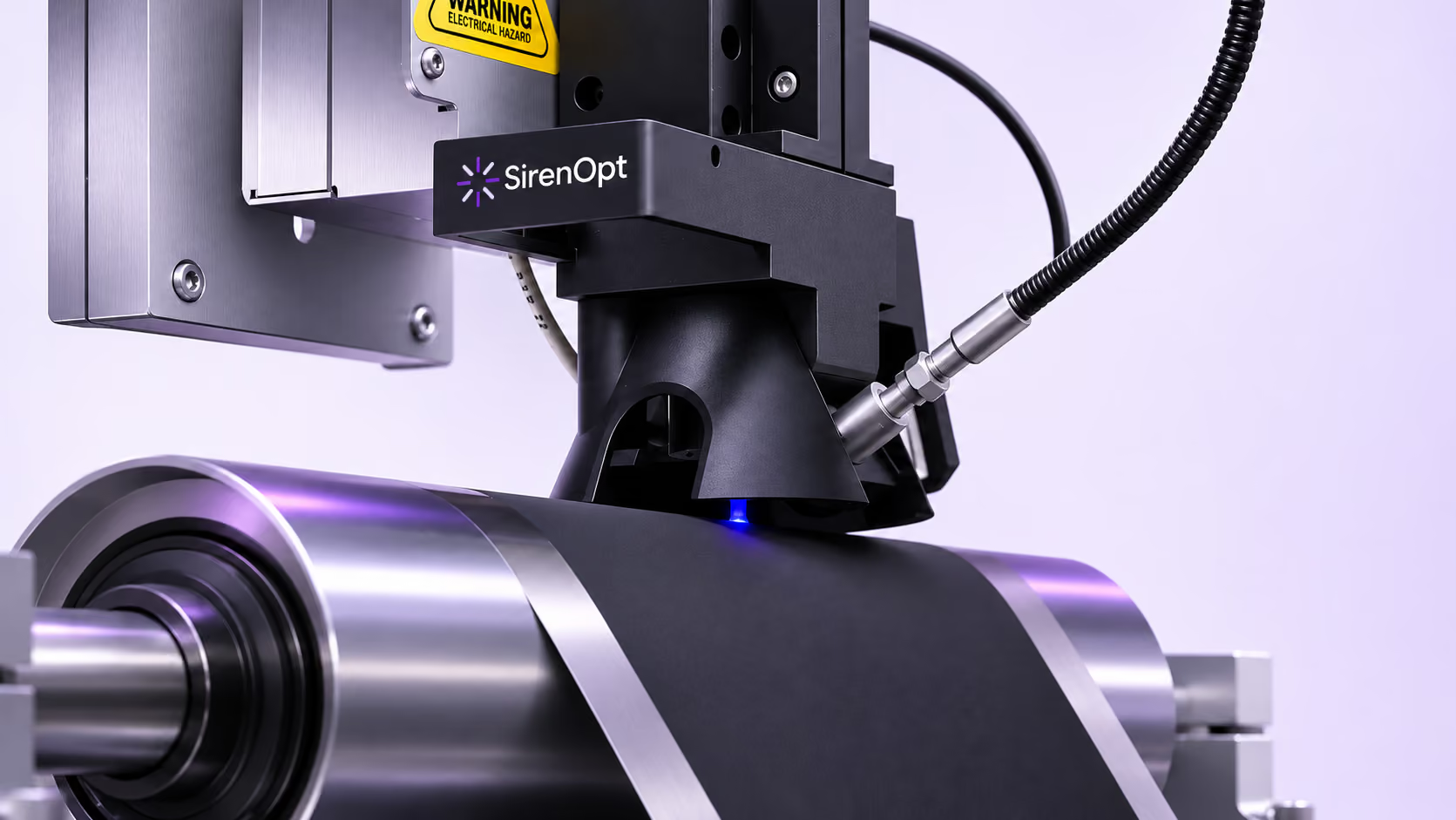
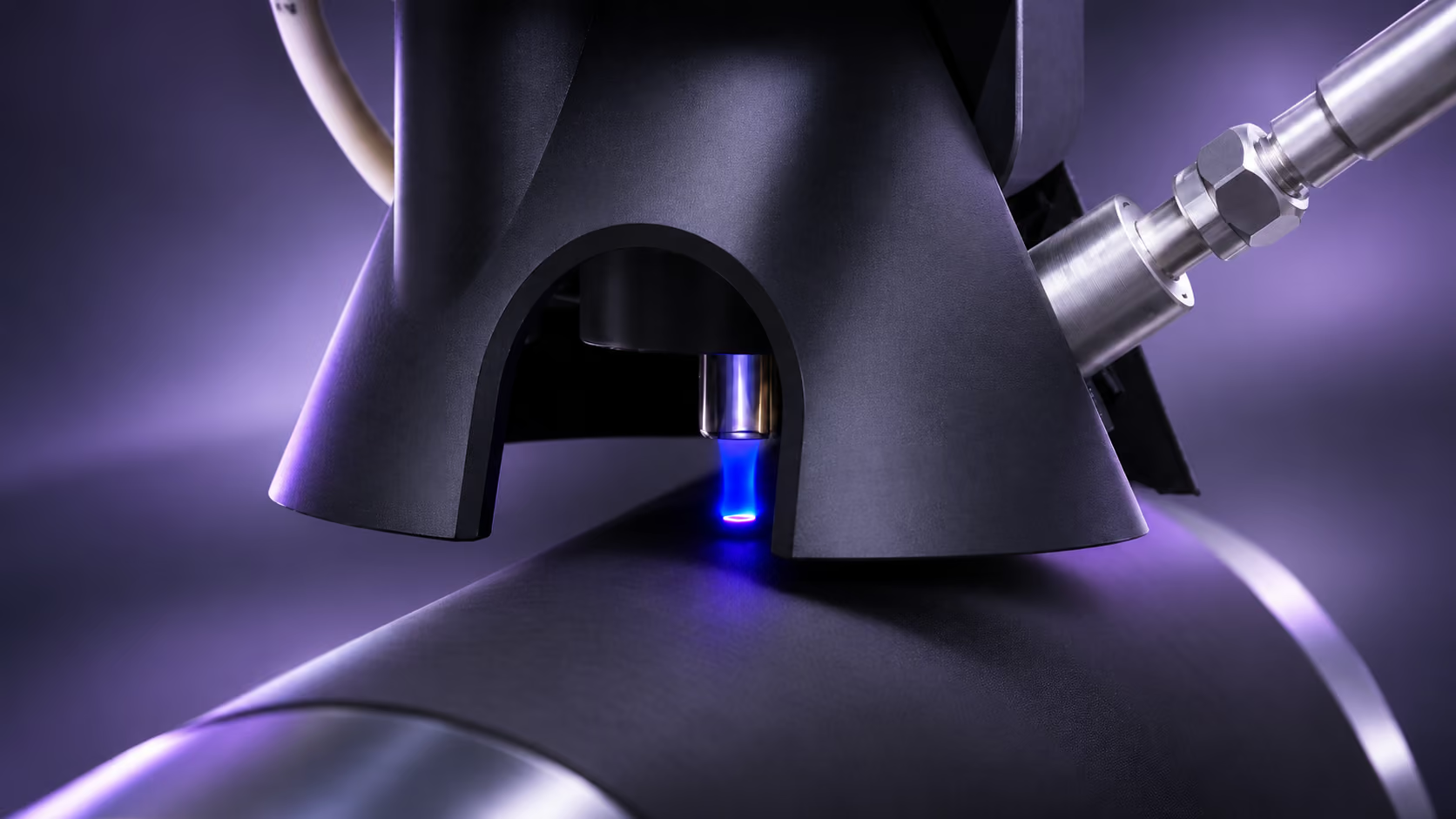
Mounted over the line, PlasmaSens Web measures coated material as it moves, without contact and without slowing the line.
Analysis Examples
Every measurement comes from the same scan and the same fingerprint, so properties can be read side by side as the roll moves. A change in one shows up next to the others at the same position, so teams can see how they affect each other.
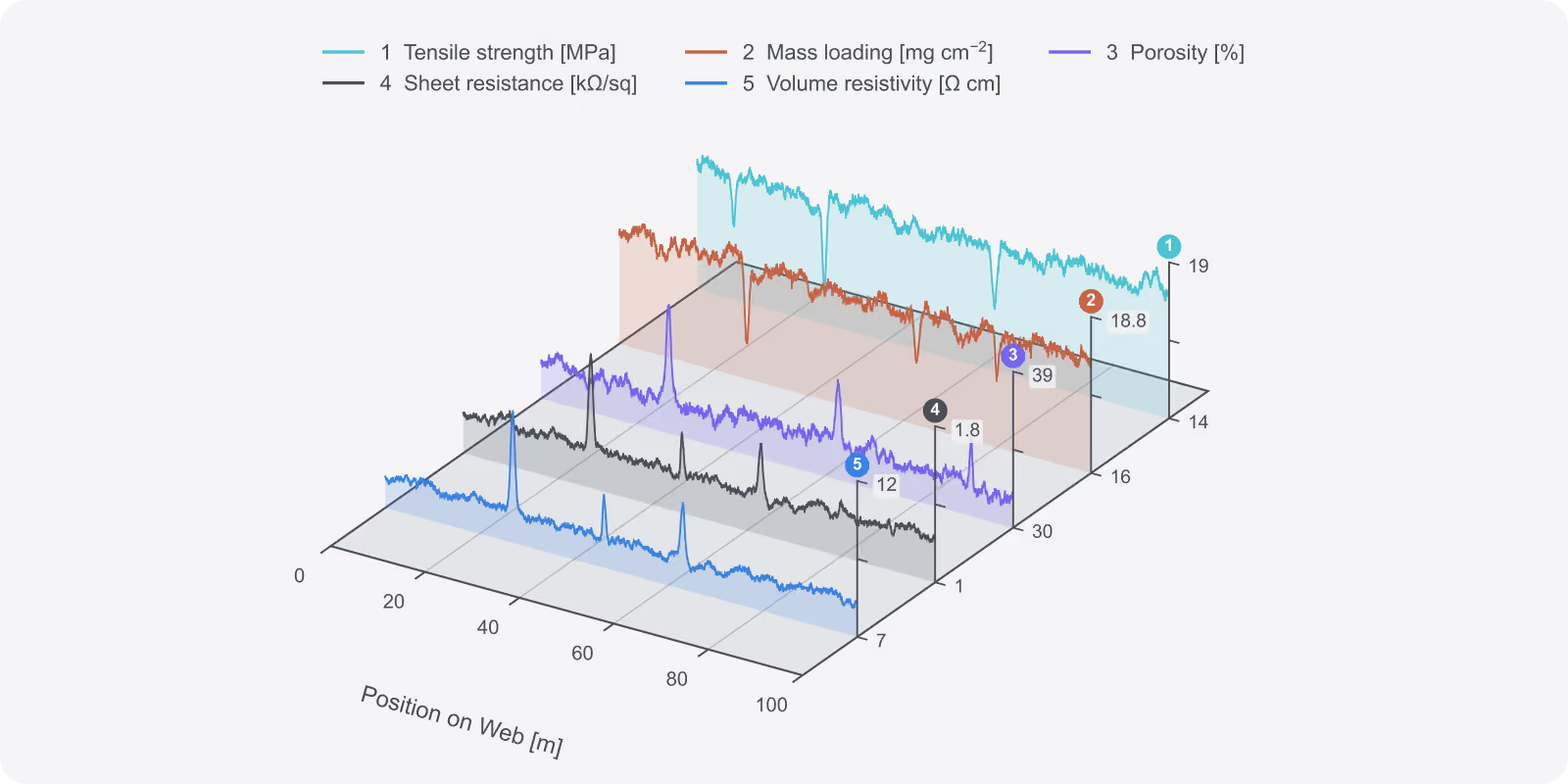
Five electrode properties from one scan, read side by side along 100 m of a moving web. Illustrative data.
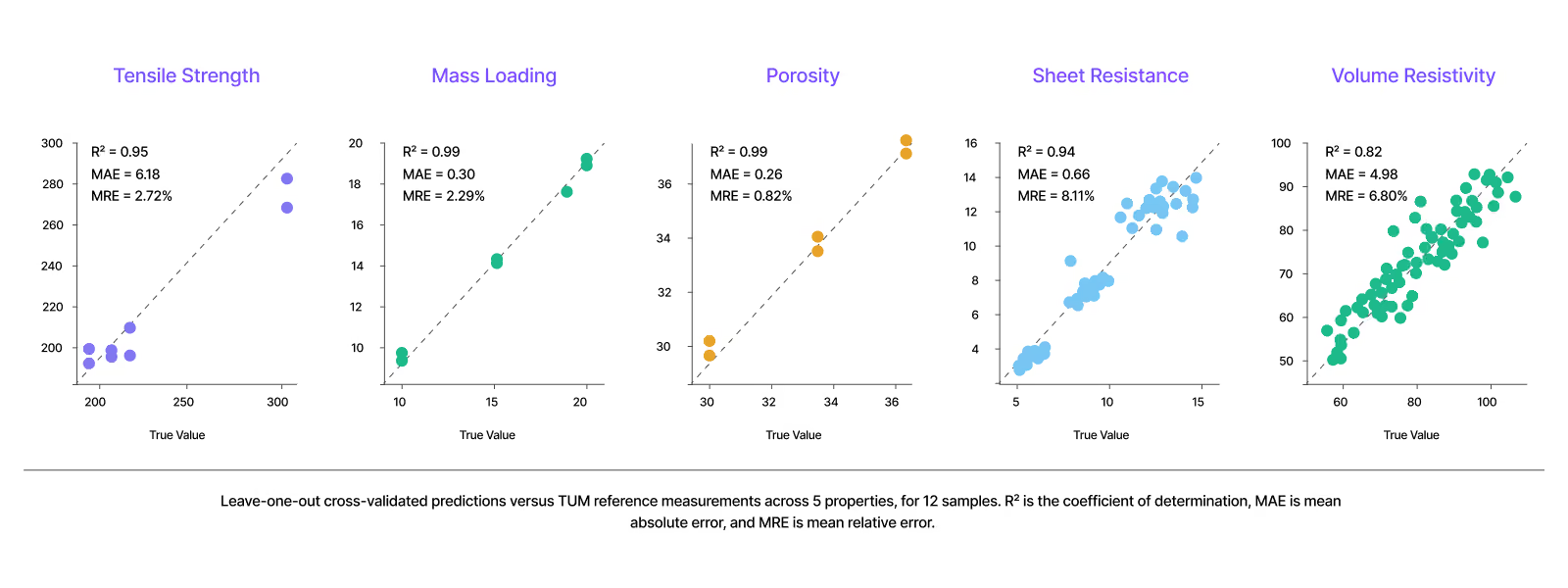
Leave-one-out cross-validated predictions. R² is the coefficient of determination.
Independent validation with the Technical University of Munich (TUM). Each chart compares a property predicted from PlasmaSens scans with TUM’s reference lab measurement of the same sample; the closer the points sit to the line, the better the match. The study used PlasmaSens Standalone on electrode samples, and the same approach applies to PlasmaSens Web.
No. PlasmaSens uses very low-energy cold atmospheric plasma, generated using 1 to 1.5 watts and emitted at about 40 °C. PlasmaSens is non-contact, and works in normal ambient conditions and dry rooms. Coated material rolls will proceed down the manufacturing line without any impact from PlasmaSens characterization. We work with customers during the intake process to ensure we mutually agree on property and defect targets as well as operating parameters that are tuned to specific customer material targets.
As few as five samples cut from a coated roll can be sufficient for a successful demonstration, ideally with reference measurements for the properties or defects you care about. We scan them and send a preliminary report. If you don’t have reference data for your samples, unsupervised analysis and signal maps can still reveal and visualize meaningful information about your samples.
We have reported electrode properties and defects (specifically metallic contamination) at line speeds up to 30 m/min on our validation platform. We are actively developing higher speed implementations, and our initial commercial product will support line speeds up to 60 m/min.
Each head gives sinusoidal coverage across the web, similar to a traversing beta or ultrasonic gauge. We size the number of heads to your web width, line speed and the detail you need.
Wherever the properties you care about are set. On electrode lines, that is typically after coating, drying and calendering.
Documents
Enter your details and we will email you the product brochure.